

An honest review of dedicated puree gadgets vs. what you already own — and what the marketing conveniently leaves out about how long this phase actually lasts.
It’s 6 PM on a Tuesday. You’ve been awake since 5. The baby has been awake since 4:30. You’re standing in the kitchen in front of a device that has a steamer compartment, a blending bowl, a reservoir that needs descaling, and three separate lids. You’re trying to make two tablespoons of sweet potato purée. The machine is beeping. You don’t know why. The manual is somewhere.
This was not what the website showed you. The website showed a well-rested woman with clean hair, smiling at her countertop, gently pouring a smooth amber purée into a small glass jar while soft light streamed through an open window. The website was lying.
You bought the best baby food maker you could find. You registered for it. Someone at your baby shower gave a little speech about it. And now it’s standing on your counter like a $150 piece of equipment you don’t understand, making your evening worse.
I’ve been there. And I’m here to tell you: the device was never the point. The marketing was the point. And you deserved better information before you handed over your money.
Section 01: The Trap
Why tired, loving parents buy gear they don’t need
Let’s talk about the actual sales mechanism at work here, because it’s worth naming it. You are pregnant or newly postpartum, you love this child more than you’ve loved anything, and the algorithm knows it. It has been serving you starting solids gear for weeks. Every ad shows a beaming baby eating something colorful and nutritious that their devoted parent made from scratch using the right equipment.
The implicit threat in all of it: if you don’t have the right gear, you might fail at feeding. You might use the wrong method. You might serve the wrong texture. The subtext is anxiety, and anxiety is an excellent purchasing trigger, especially when it attaches itself to love for your child.
So here’s what you don’t hear: the smooth purée phase is approximately ten weeks long. Sometimes eight. For some babies who go straight to baby-led weaning or skip thin purées entirely — less. The baby food blender that’s marketed as an essential piece of kitchen equipment has a practical lifespan that is, generously, about two months before your baby is eating mashed, lumpy, and then soft finger foods. This is a fact that dedicated baby food maker companies are not advertising.
The highlighted column is the entire window a dedicated baby food maker genuinely earns its keep. Eight to ten weeks, maximum. Is $150 a rational spend for ten weeks of convenience? The math is not flattering.
Section 02: The All-in-One Roast
Let’s talk about what “all-in-one” really means in practice
“All-in-one” is a feature description that sounds like a benefit and functions as a warning. When a product says it steams and blends and reheats, what it actually means is that all of those functions live in one device with multiple components, multiple seals, multiple contact points where food residue settles, and multiple pieces that are too small and too oddly shaped to clean properly.
Why the “All-in-One Baby Food Maker” Fails Every Parent Eventually
I’m not being cruel about specific brands here — I’m describing the structural problem that applies across almost every dedicated baby food processor on the market. These are engineering constraints, not manufacturing defects.
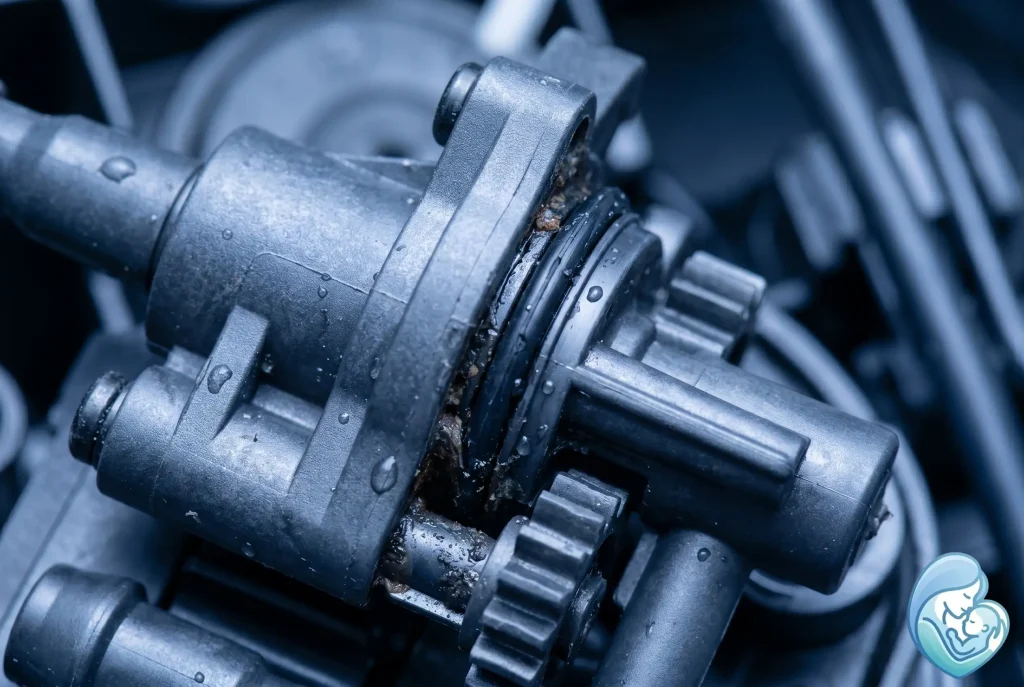
The steaming reservoir connects to the blending bowl via a valve or tube. That junction is hell to clean. Purée gets into it. It dries. By the time you’ve noticed it’s there, it’s been sitting for two days. This is not speculation — this is the number-one complaint in reviews of every major dedicated baby food maker.
Small tubes, hidden reservoirs, and complex blade assemblies are ideal environments for mold. Warm. Damp. Hard to reach. Baby food makers are recalled regularly for mold contamination — it’s not a rare failure, it’s a predictable consequence of the design.
The blending motor in a dedicated baby food maker is sized for the machine, not for the job. Your regular blender is significantly more powerful. For fibrous vegetables — carrots, green beans, peas — a dedicated machine often produces a grainy texture that a full-size blender would have handled in seconds.
You will use this machine for approximately eight to ten weeks at full intensity. Then less. Then never. And unlike a general kitchen tool, it cannot be repurposed for anything else. Your regular blender can make smoothies for the next fifteen years.
It is a dedicated appliance for a temporary developmental phase. It takes up permanent counter space for a temporary problem. This trade-off gets worse the smaller your kitchen is.
⚠️ A note on "self-cleaning" claims
Several baby food makers advertise a self-cleaning function. This involves running water through the machine. It does not clean the valve junction. It does not clean the underside of the blade assembly. It does not reach the reservoir seal. "Self-cleaning" means it rinses itself. It does not mean it is clean.
Section 03: Liza’s Tool
The one piece of gear I will actually recommend
I’m going to recommend exactly one piece of equipment for making baby food on a budget. Not because it’s the most exciting answer. Because it is correct.
Braun MultiQuick 5 Vario
“One detachable part. Goes in the dishwasher. Still useful when your ‘baby’ is in college.”
- The Anti-Biohazard Design: The blending shaft clicks off and goes straight into the dishwasher. No hidden tubes, no reservoirs for mold, no internal valves to scrub.
- Real Power: Unlike weak baby food processors, this has 1000W. It turns a carrot into silk in 4 seconds flat.
- Pot-to-Plate: Blend directly in the steaming pot. Zero extra dishes to wash.
Section 04: The Real Alternatives
What’s already in your kitchen, ranked by how little it costs
Before we get to the immersion blender, I want to spend a moment on the options that cost even less. Because a meaningful portion of the starting solids foods your baby will eat in months six through eight require no blending equipment whatsoever.
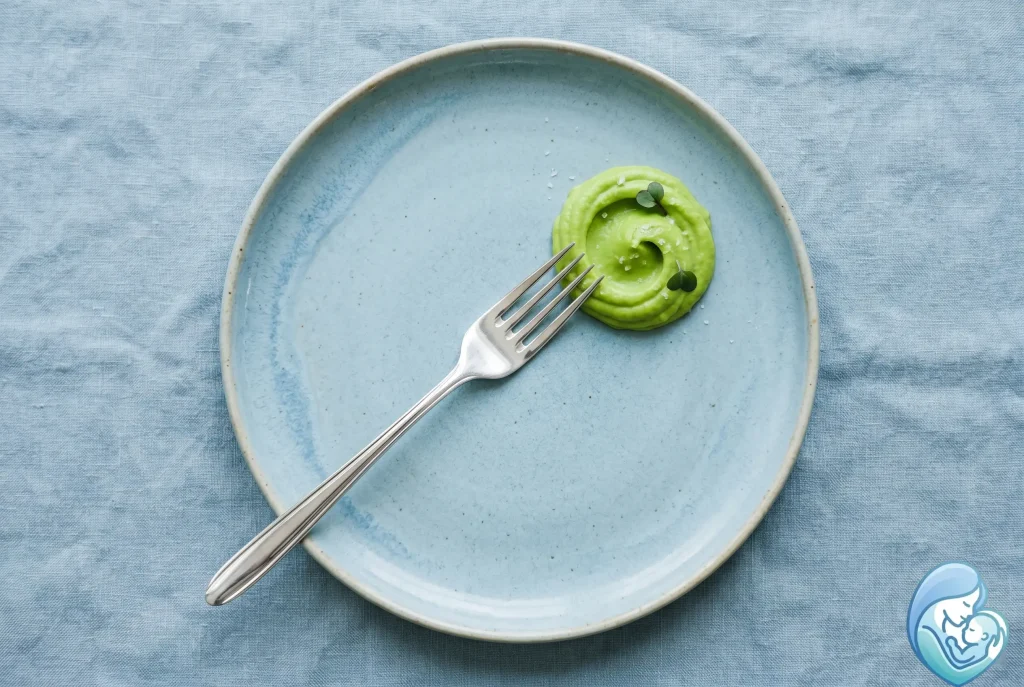
Avocado. Banana. Ripe mango. Cooked sweet potato. Soft-cooked pear. Butternut squash. Every one of these foods can be made into a perfectly adequate first purée using a fork and approximately forty-five seconds of manual effort. The texture may be slightly less smooth than a machine-blended version. Babies at this stage do not notice. They’re experiencing food for the first time. They do not have opinions about texture gradients yet. The fork works.
For soft fruits and cooked vegetables. Banana, avocado, sweet potato, squash. Mash. Done. No electricity required. Dishwasher safe.
Already own it. 10x more powerful than a dedicated baby food maker. Handles fibrous veg without granular texture. Wash the jar. Reassemble. Finished.
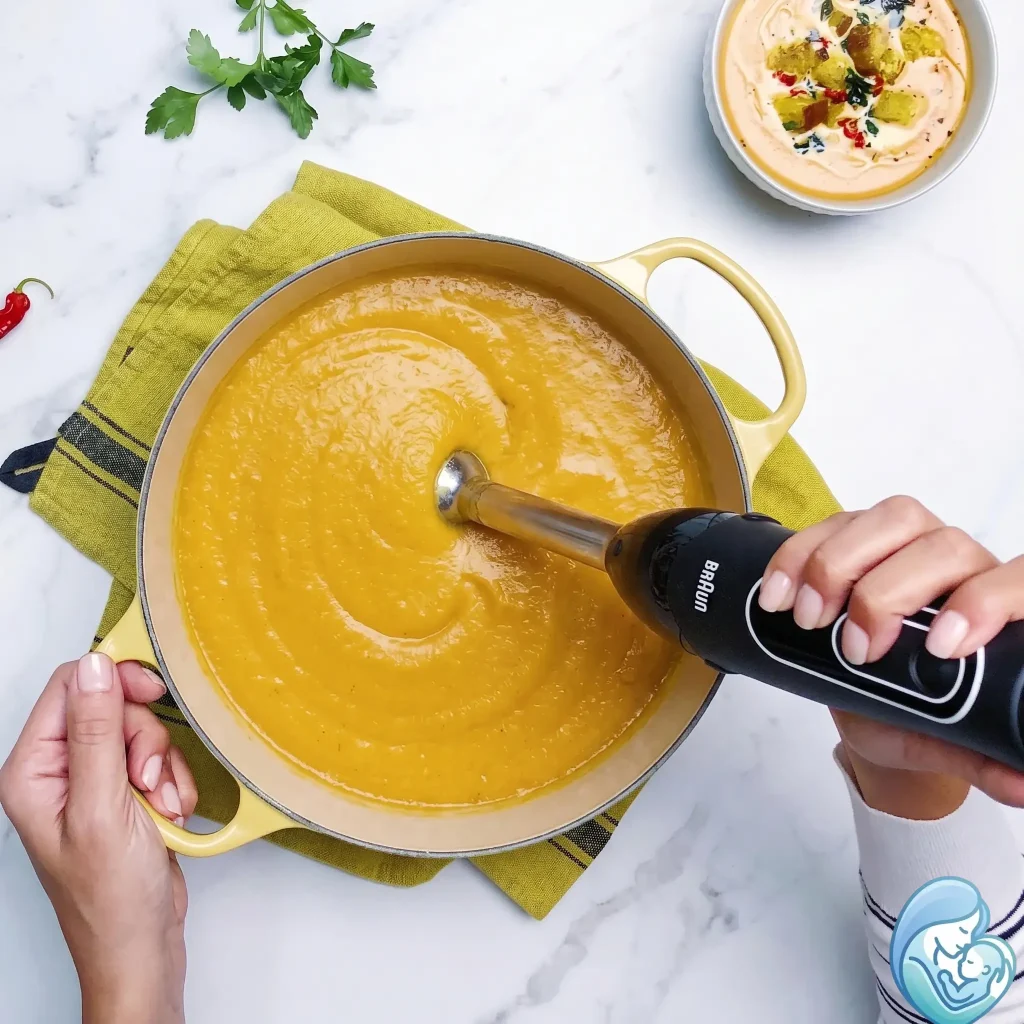
Blend in the pot. One part to clean. Works for baby food and then every soup you make for the next decade. The only equipment worth buying.
✓ The texture hierarchy nobody explains
Baby-led weaning research increasingly suggests that babies who skip thin smooth purées and go straight to soft mashed textures — with a fork — develop better chewing mechanics and have fewer feeding difficulties later. The smooth purée phase that the dedicated machine exists to serve is not even mandatory. Talk to your pediatrician about what approach fits your baby. "Needs expensive equipment" is not one of the options.
$150 for ten weeks of convenience you could have gotten from a fork.— This is the actual math. The machine companies hope you never do it.
-
The smooth purée phase lasts eight to ten weeks. A dedicated baby food maker is a $150 piece of equipment for a two-month developmental window. This is not a rational spend.
-
“All-in-one” means “hard to clean.” The junction between steamer and blender is hell to clean. Mold follows. This is an engineering constraint, not a brand-specific defect. It applies across almost every dedicated machine on the market.
-
A fork handles most first foods. Avocado, banana, sweet potato, butternut squash — fork and forty-five seconds. No electricity. No cleaning. No beeping. The baby does not care about texture gradients at this stage.
-
Your existing blender is already better at blending. More powerful. Easier to wash. Already paid for. If you need truly smooth purées for fibrous vegetables, use what’s already on your counter.
-
If you buy one thing: an immersion blender. $30–50. One part to clean. Blends in the pot. Lasts fifteen years. Useful for everything from baby food to the soup you’ll make next winter. This is the only equipment recommendation I’m standing behind.
-
The anxiety the marketing sells you is real. The solution they’re selling is not. You are capable of feeding your baby with tools you already own. You don’t need a special device. You need information — which is what you just got, and what cost $0.
Disclaimer: This post contains affiliate links. Purchases made through these links may earn a small commission. All opinions are my own and were formed before any commission structure existed. The immersion blender recommendation is not sponsored — it’s just correct.