

Stokke Tripp Trapp vs. IKEA Antilop — an honest, mess-first comparison of the two most argued-about chairs in parenthood.
Starting solids sounds gentle and developmental in the parenting books. In practice it means blended sweet potato on the ceiling, a baby who treats purée as both food and hair product, and the realization that you will spend a meaningful portion of the next eighteen months cleaning a chair. The question is which chair, and how much pain you’re willing to pay for that experience.
The high chair debate is older than Instagram but it has been supercharged by it. In one corner: the Stokke Tripp Trapp, beloved by interior designers, Scandinavian parenting accounts, and people who describe their kitchens as “curated.” In the other: the IKEA Antilop, which has been holding children upright since 1995 and costs less than a large pizza.
I’ve used both. I have opinions. None of them are sponsored.
Section 01: The Stokke Tripp Trapp
The Aesthetic Heirloom — pros, cons, and the spaghetti sauce problem
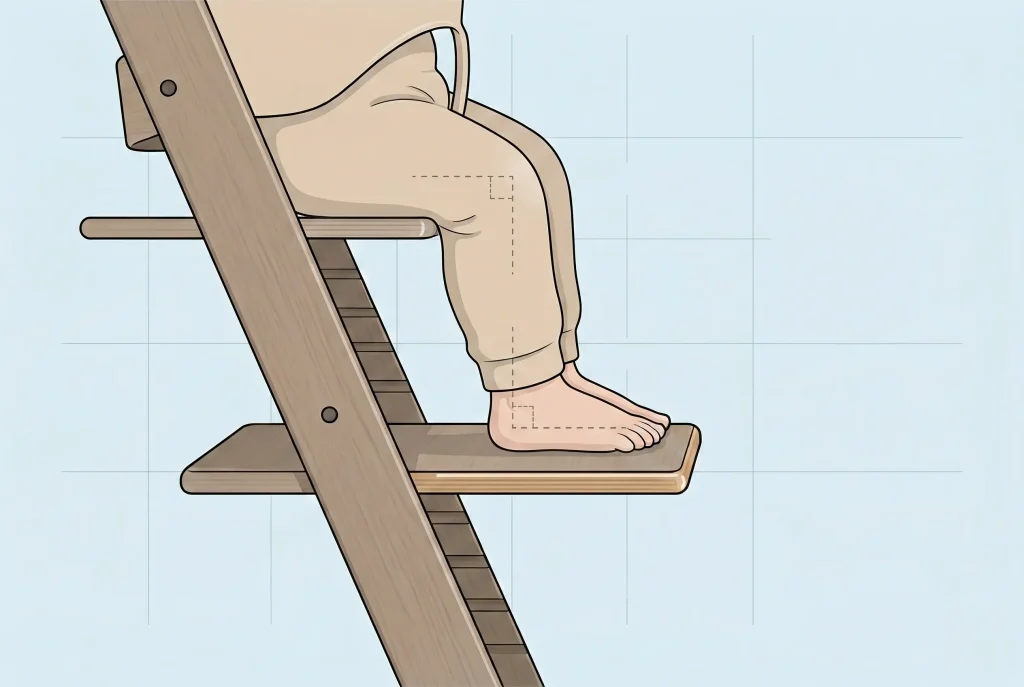
Let’s be fair first. The Tripp Trapp is genuinely a good chair. Not a “good for the price” chair — it’s objectively excellent engineering. The adjustable footrest and seat plate mean the chair grows with your child, maintaining the 90-90-90 angle from toddler through school age. The beech wood is solid. These chairs last twenty years and sell secondhand for $150 without missing a beat. The design is not marketing fluff — there are real biomechanical reasons pediatric occupational therapists recommend it.
All of that is true. And then the spaghetti arrives.
A beautifully engineered chair with a genuine ergonomic argument behind every design decision. Also: an object that will have strained peas worked into its grain by Tuesday.
- Grows with your child. Adjustable seat and footrest mean correct ergonomic positioning from 6 months to 10+ years. You buy once.
- The footrest is the point. The famous adjustable footrest maintains the 90-90-90 angle. More on why this matters below.
- Indestructible. These chairs genuinely last twenty years. Secondhand market is robust. $150 used is exceptional value.
- No harness wobble. The Tripp Trapp’s geometry means the child sits within the table, stable, with their arms at correct height. Ergonomically superior to almost every alternative.
- The price is obscene. $300–380 for a chair. The Baby Set harness accessory adds another $50. The cushion is $80. You can spend $500 before the baby sits down once.
- The wooden grain is a food trap. Purée, spaghetti sauce, and anything with turmeric will settle into the grain of the wood. “Wipe clean” is not a complete description of what you will be doing at 7:30 PM.
- Assembly requires patience. The slot-and-peg system is logical once built but the manual assumes a level of spatial reasoning that is difficult to access on day three of no sleep.
- No tray. The tray is an additional purchase ($60). The Tripp Trapp is designed to pull up to the table — fine for older children, less practical for babies who need a surface at their height.
💡 The secondhand argument
Because these chairs are indestructible and retain their ergonomic function indefinitely, the secondhand market is exceptional. A used Tripp Trapp from Facebook Marketplace for $120–150 is a completely different purchasing decision than $350 new. The wood cleans the same way whether it's new or three years old. If the Tripp Trapp appeals to you ergonomically and aesthetically, buy it secondhand. The chair does not care about its origin story.
Section 02: The IKEA Antilop
The Practical Legend — beloved, impractical, and missing something critical
The Antilop has been a parenting staple for three decades because it is correct in all the ways that matter for budget and cleaning, and wrong in one way that matters for safety. Let’s do both.
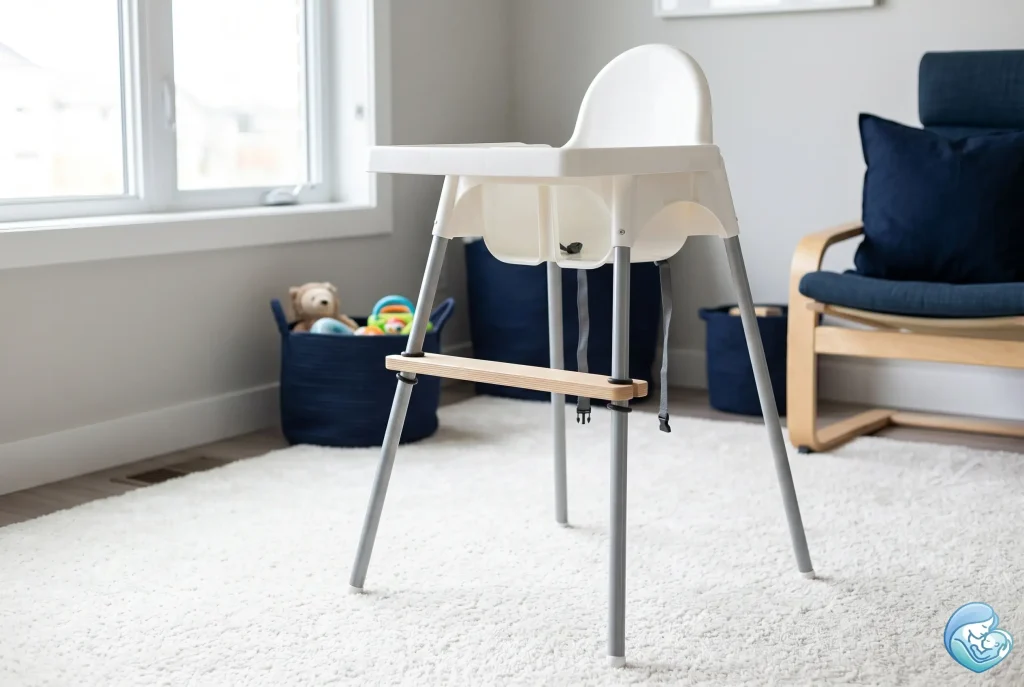
One of the bestselling baby products ever manufactured. Smooth plastic, detachable legs, fits in a shower. Also: missing the single feature that pediatric therapists most consistently recommend.
- $20. That’s it. That’s the argument. At $20, the entire risk calculus changes.
- Takes the whole thing in the shower. Legs detach. The chair and tray go under the showerhead. Spaghetti sauce, purée, the egg-yolk incident — all of it gone in two minutes. This is not a minor feature.
- Dishwasher-safe tray. Snap it off. Put it in the dishwasher. Done.
- Lightweight and portable. You will move this chair around your kitchen more than you expect. At under 4 lbs, this is not a problem.
- No footrest. This is the big one. The Antilop’s legs are straight plastic — no platform, no support surface for your child’s feet. At correct table height, a small child’s legs dangle freely. This matters more than it sounds. See the science box below.
- The legs are a trip hazard. They splay outward in a way that catches adult feet, particularly at 6 AM on the way to the coffee machine. You will kick this chair a minimum of forty times before your child starts solids.
- No adjustability. One height. One configuration. Fine at 8 months, less ideal at 18 months when your child has grown and the table proportion is off.
- Looks like what it is. This should not matter and arguably does not matter. But if it matters to you, you should know it in advance.
Section 03: The Ergonomic Argument
The scientific why — and the reason the footrest debate is not actually aesthetic
I want to spend real time on the footrest question because it’s consistently underexplained in high chair comparisons, and it matters practically in ways that go beyond “comfortable posture.”
The 90-90-90 rule is the standard used by pediatric occupational therapists and speech-language pathologists when assessing feeding position. It describes the optimal joint angles for safe, efficient eating:
A footrest stabilizes the core. When a child’s feet have nowhere to rest, their core muscles work continuously to maintain upright posture — muscles that are also used in swallowing and breathing. Core fatigue during a meal directly affects safe swallowing mechanics.
Dangling feet affect digestion. The hip angle when feet are unsupported compresses the abdominal cavity differently than a supported position, which can slow gastric emptying and increase reflux in babies already prone to it.
Foot support reduces choking risk. A child who is working to stabilize their posture cannot fully concentrate on oral motor control. Speech-language pathologists specifically cite unsupported posture as a contributing factor in pediatric feeding difficulties and aspiration events.
This is why the Tripp Trapp footrest is famous. It’s not an aesthetic choice. It’s why pediatric OTs consistently recommend it above chairs that otherwise look “good enough.” And it’s why using an IKEA Antilop without addressing the footrest gap is a meaningful omission, not a cosmetic one.
Section 04: The Mess Question
Which kind of cleaning disaster would you prefer?
This is the section where I ask you to think honestly about your life. Not your ideal life — your actual life, at 7 PM, with a baby who has painted themselves in tomato pasta.
The Tripp Trapp is wiped clean. It’s also sealed wood — and wood grain catches. Deep cleaning requires real attention. The cushion is machine washable (thank god) but the chair itself needs more than a cursory wipe. Not impossible. Just actual work, regularly.
This is why the Antilop has survived thirty years. The cleaning argument is genuinely decisive for many families. Smooth plastic, no grain, full water exposure. The tray goes in the dishwasher. You will not spend significant mental energy on cleaning an Antilop.
The chair you'll actually clean is the safer chair. The one you resent cleaning is the one that develops mold in a crevice.
— Choose the mess you can live with, not the aesthetic you can't maintain.
Related: What does it take to make good baby food?
Section 04B: The Budget Hack That Wins
The third option nobody mentions
Here is the thing the Stokke versus Antilop debate misses: you are not required to choose between $350 and “ergonomically incomplete.” There is a third option that costs under $50 total and addresses every criticism of the Antilop without replacing it.
The IKEA Antilop’s only real structural problem — the missing footrest — has an aftermarket solution. Small makers on Etsy and specialty baby gear shops (like Yeah Baby Goods) produce wooden footrests specifically engineered to clip onto the Antilop’s legs. They’re adjustable, sturdy, and maintain the 90-90-90 position the pediatric literature recommends.
(chair + tray + harness)
(Etsy / Yeah Baby Goods)
The combined setup gives you the cleaning advantage of the Antilop (shower it, tray in dishwasher) plus the ergonomic support of a proper footrest at a fraction of any dedicated ergonomic chair’s cost. The footrest is removable for cleaning. The aesthetic is “practical with intention” rather than “bare plastic.” This is the smartest minimalist high chair option available. Search “IKEA Antilop footrest” on Etsy — multiple sellers, most ship within a week.
The $45 Glow-Up
The IKEA Glow-Up: From $20 Plastic to Designer Chic
The IKEA Antilop is a blank canvas. For about $30 extra, you can “Liza-fy” it into a chair that looks like it cost $300, while actually improving your baby’s comfort.
Silver legs look like a hospital ward. Vinyl wood-grain wraps (available in Maple, Oak, or Walnut) transform the aesthetic instantly.
Search Amazon Wraps →The most important upgrade. It fixes the 90-90-90 rule. Search for “Adjustable Bamboo Footrest for Antilop” for a perfect fit.
Search Amazon Footrests →Add an inflatable insert with a stylish silicone or fabric cover. It makes the wide seat snug and ergonomic for smaller babies.
Search Amazon Cushions →Skip the scrubbing. A silicone placemat fits exactly into the IKEA tray. When mealtime is over, just peel it off and rinse.
Search Amazon Mats →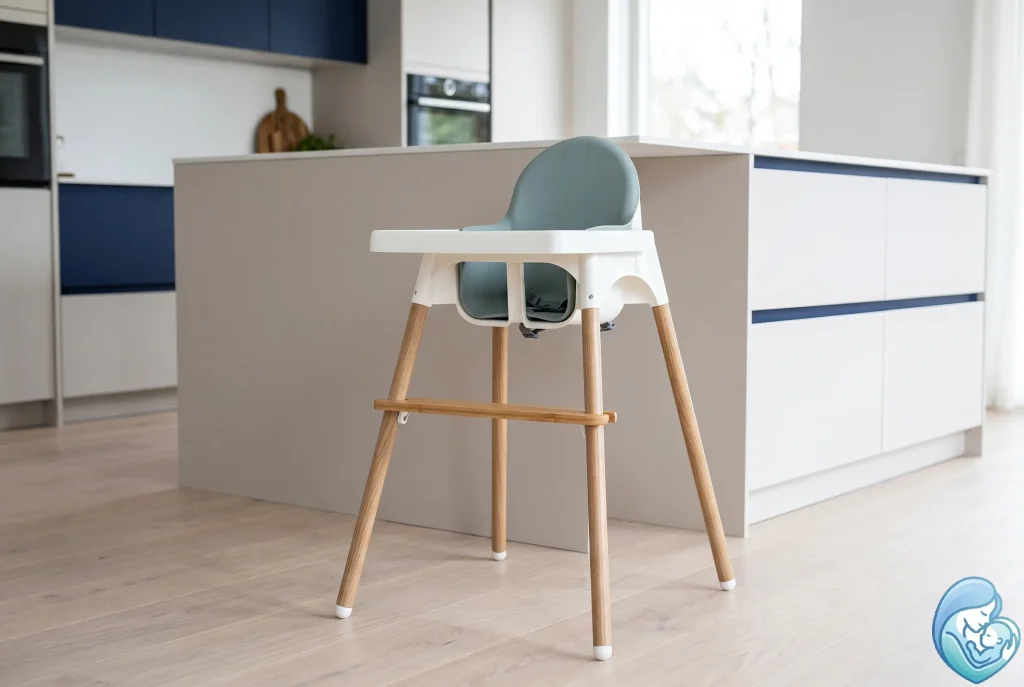
Liza’s Verdict
The answer, without hedging
Both chairs have genuine cases in their favor. Here is mine.
Buy it secondhand for $120–150. At that price, it’s genuinely excellent value — you get twenty years of ergonomically correct use, easy resale, and the real footrest advantage without the new-price obscenity. Do not buy a new Tripp Trapp unless cost is not a variable for your household. The used market for these chairs is rich and the chairs are indestructible.
Buy it only with an aftermarket footrest. The bare Antilop without a footrest is ergonomically incomplete. The Antilop with a $25 wooden footrest is a $45 solution that covers the footrest argument and retains the cleaning advantage. This is the minimalist right answer. Don’t buy the Antilop and then wonder why your child seems uncomfortable at meals — fix the footrest and it becomes a genuinely good chair.
✓ The final summary
The best baby high chair for most families is either a secondhand Tripp Trapp (for the ergonomics and longevity at a reasonable used price) or an IKEA Antilop plus an aftermarket footrest (for budget and cleaning sanity). A new $350 Tripp Trapp is only the right answer if secondhand isn't available and cost is genuinely not a concern. A bare Antilop without a footrest is not a complete answer regardless of how well it cleans.
Liza's Bottom Line
// for the parent currently staring at the IKEA website
The footrest is not aesthetic. It's structural. The 90-90-90 rule is used by pediatric occupational therapists for a reason — foot support stabilizes core, aids swallowing, and reduces choking risk. Any chair without a footrest is an incomplete feeding setup for a young child.

The Tripp Trapp is excellent. It is not $350 excellent when bought new. Buy it secondhand. The used market is abundant, prices are reasonable, and the chair itself is indestructible. This is the correct Stokke purchase decision.

The Antilop wins on cleaning, full stop. If the thought of cleaning wooden grain at 7 PM with a tired toddler is a dealbreaker for you, the Antilop is the honest choice. Just fix the footrest.

The $45 Antilop + aftermarket footrest is the minimalist right answer. $20 chair, $25 footrest, shower-washable, ergonomically correct. This beats a new Tripp Trapp on value and beats a bare Antilop on safety. It's the option nobody puts at the top of their list and the one I'd recommend first.

Neither chair prevents spaghetti on the ceiling. That's just starting solids. Accept it and choose your cleanup method accordingly.

— Liza · The turmeric gets into everything. Choose your material accordingly.